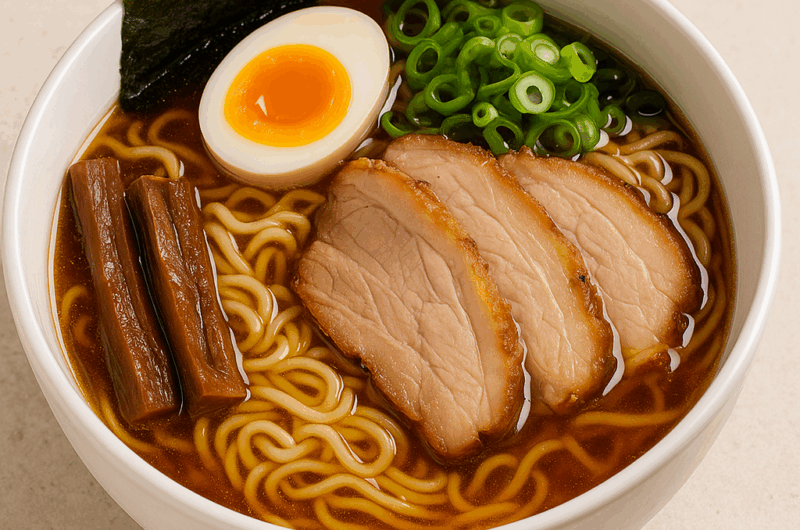
Ramen Shoyu – Classic Soy Sauce Japanese Noodle Soup
Course: Japanese Cuisine, Pork, Ramen, Soup4
servings15
minutes40
minutes300
kcalIngredients
4 cups (1 L) chicken or vegetable broth
2 cups water
2 packs ramen noodles (or fresh noodles)
2 tablespoons soy sauce
1 tablespoon mirin (optional)
1 teaspoon sesame oil
2 cloves garlic, minced
1 teaspoon ginger, grated
2 green onions, sliced
2 boiled eggs, halved
1 sheet nori (seaweed), cut into strips
1 cup sliced mushrooms (shiitake or button)
1 cup cooked pork (optional)
Salt and pepper to taste
Directions
- Prepare the broth: In a pot, heat sesame oil over medium heat. Add garlic and ginger, sauté for 1-2 minutes until fragrant.
- Add liquids: Pour in the chicken/vegetable broth and water. Bring to a simmer.
- Season: Add soy sauce and mirin. Adjust salt and pepper to taste. Let simmer for 10-15 minutes.
- Cook noodles: In a separate pot, cook ramen noodles according to package instructions. Drain and set aside.
- Prepare toppings: Slice green onions, boil eggs (7 minutes for soft yolk), cook mushrooms, and meat if using.
- Assemble bowls: Divide noodles into bowls, pour hot broth over noodles, and arrange toppings: eggs, mushrooms, meat, green onions, and nori.
- Serve: Enjoy immediately while hot. Optional: drizzle extra soy sauce or sesame oil for more flavor.
Notes
- For extra depth, simmer broth longer or add kombu (seaweed) while simmering.
Soft-boiled eggs can be marinated in soy sauce for 30 minutes for extra flavor.
Ramen Shoyu – Classic Soy Sauce Japanese Noodle Soup
Ramen Shoyu is one of Japan’s oldest noodle soups. It has a clear soy sauce broth and a comforting aroma. Moreover, it became a symbol of harmony and simplicity in Japanese food culture. This article explores its origins, evolution, and enduring popularity.
Origins of Ramen Shoyu
The roots of Japanese ramen go back to the early 1900s, when Chinese-style noodles known as Shina soba arrived in Japan. Tokyo cooks added soy sauce to a light broth. As a result, they created a flavorful and balanced soup. Consequently, it quickly became a favorite dish in the city. In addition, it laid the foundation for Japan’s signature ramen styles.
Ramen Shoyu and Japanese Culinary Identity
Soy sauce ramen helped define modern Japanese cuisine. Furthermore, the seasoning provided depth and umami without heaviness. It reflected the Japanese value of balance. Moreover, chefs consider this style one of the most authentic forms of traditional noodle dishes. Therefore, it remains a benchmark for noodle shops today.
Postwar Popularity of Ramen Shoyu
After World War II, ramen became a daily staple in Japan. People needed affordable and filling meals. Thus, this ramen style became a symbol of comfort and recovery. Shops adapted recipes to local tastes. In addition, the rise of instant ramen in the 1950s helped spread the flavor globally. Consequently, soy sauce noodles became one of the first Japanese dishes recognized worldwide.
Modern Shoyu Noodles Around the World
Today, shoyu noodles are served in Tokyo and abroad. Moreover, their taste allows chefs to innovate while honoring tradition. For example, they may use chicken, pork, or seafood stock, but soy sauce remains the key flavor. Furthermore, this style continues to represent craftsmanship, creativity, and simplicity. Therefore, it has a timeless appeal for both locals and visitors.
The Cultural Story of Ramen Shoyu
Ramen Shoyu tells a story about adaptation and identity. In addition, it shows how Japan transformed foreign influences into a national treasure. From Tokyo streets to global restaurants, it reflects culture and tradition. Moreover, it connects people through shared taste and comfort. As a result, this ramen style is more than food; it is a cultural symbol.
Learn More About Soy Sauce Ramen
Read more about the history of ramen or explore different types of ramen to see how soy sauce ramen influenced other varieties such as miso, shio, and tonkotsu. Moreover, these articles provide additional insight into Japanese culinary culture.
Conclusion: The Legacy of Ramen Shoyu
Soy sauce ramen remains a central part of Japanese noodle culture. It is balanced, flavorful, and timeless. Above all, it shows how a simple bowl of noodles can connect tradition, creativity, and comfort across generations. Therefore, Ramen Shoyu continues to be beloved in Japan and worldwide.
Learn More About Soy Sauce Ramen
Read more about the history of ramen or explore different types of ramen to see how soy sauce ramen influenced other varieties such as miso, shio, and tonkotsu. Moreover, these articles provide additional insight into Japanese culinary culture. For general background, visit Wikipedia’s ramen article or learn about ramen in Japan through the Japan National Tourism Organization.