Paella Perfected: Tips, Traditions, and Recipes
Course: main CourseCuisine: Spanish CuisineDifficulty: Medium4
servings20
minutes35
minutes1920
kcalIngredients
300 g chicken breast or thighs, cut into chunks
200 g shrimp, peeled and deveined
200 g mussels or clams (optional)
200 g squid rings (optional)
300 g paella rice (bomba or arborio)
1 large onion, finely chopped
1 red bell pepper, sliced into strips
2 ripe tomatoes, chopped (or 200 g tomato puree)
2–3 garlic cloves, minced
750 ml hot chicken or vegetable stock
1 tsp sweet paprika (smoked if possible)
A pinch of saffron threads (or turmeric as a substitute)
2 tbsp olive oil
Salt and black pepper to taste
Fresh parsley, chopped (optional)
Lemon wedges for serving
Directions
- Prepare the saffron – Soak the saffron threads in a little hot stock.
- Cook the chicken – In a wide paella pan (or large skillet), heat olive oil. Brown the chicken pieces on all sides, then set aside.
- Build the base – In the same pan, sauté onion and garlic until golden. Add bell pepper and tomatoes, cooking until a thick sauce forms. Stir in paprika and the saffron-infused stock.
- Add the rice – Pour in the rice and mix gently so it absorbs the flavors.
- Simmer – Add the hot stock, return the chicken, and spread everything evenly. Do not stir again. Let simmer on medium heat for 15–20 minutes until rice is nearly tender.
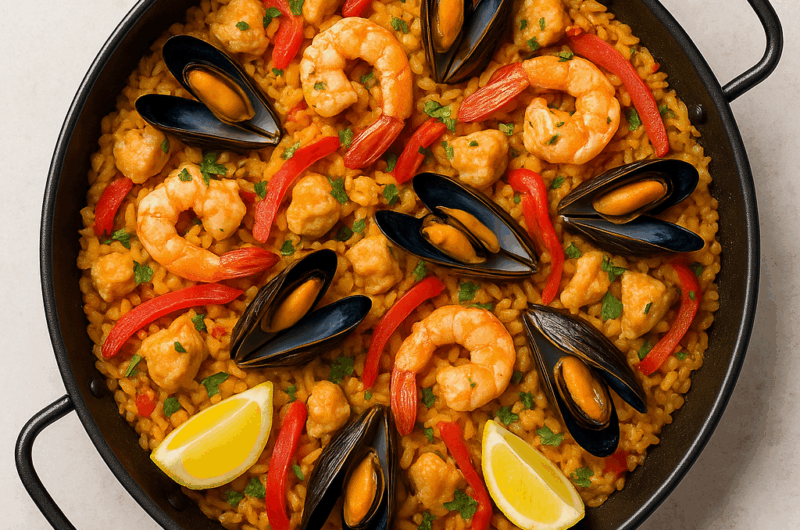
- Seafood topping – Place shrimp, mussels, and squid on top. Cover with foil or a lid and steam for 5 minutes until seafood is cooked and mussels have opened.
- Rest & serve – Remove from heat and let the paella rest for 5 minutes. Garnish with parsley and serve with lemon wedges.
Notes
- For authentic socarrat (crispy rice crust at the bottom), increase heat slightly in the last 2 minutes of cooking, then remove from heat.
Traditional Valencian paella uses chicken, rabbit, and sometimes snails instead of seafood.
Paella — The Story of Spain’s Most Famous Dish
Food Story • A mini culinary paella tale.
Paella is Spain’s most beloved rice dish. It captures the spirit of the Mediterranean with its golden color, delicate saffron, and a rich mix of land and sea flavors. Moreover, this Valencian favorite has grown into a timeless tradition that brings people together.
Paella Origins in Valencia
It all began in the rice fields near Valencia. Farmers cooked rice with local vegetables, olive oil, and sometimes rabbit or chicken. They used a wide, shallow pan called a paellera. As a result, this simple rice dish became part of Spanish identity. Furthermore, it spread from the countryside to every corner of Spain. In fact, the simplicity of this meal made it perfect for gatherings and celebrations.
A Dish That Brings People Together
As the recipe reached the coast, fishermen replaced meat with seafood such as shrimp, mussels, and squid. In this way, the dish turned into a celebration of both land and sea. Friends and families gathered around one pan, sharing stories and laughter. Consequently, it became a true meal of community. Meanwhile, its preparation turned into a social ritual enjoyed by generations.
Meaning and Color
The golden hue of the rice comes from saffron, symbolizing the warmth of the Mediterranean sun. Moreover, the dish reflects generosity, joy, and tradition. In addition, it represents the Spanish way of celebrating life — through food, family, and connection. For example, this classic dish is often cooked outdoors during festivals or long family lunches.
Global Popularity of Paella
Today, this Spanish rice dish is enjoyed worldwide. Restaurants offer versions with seafood, chicken, or vegetables. Each cook adds a personal touch. However, the heart of this dish remains the same: rice cooked with care and shared with others. On the other hand, new variations show how flexible and inspiring paella has become. As a result, it continues to unite people everywhere.
Fun fact: The word paella originally meant “pan.” The name reminds us that even the simplest tools can inspire extraordinary traditions.
Learn more about paella on Wikipedia.
Discover other traditional meals on our Food Stories page.