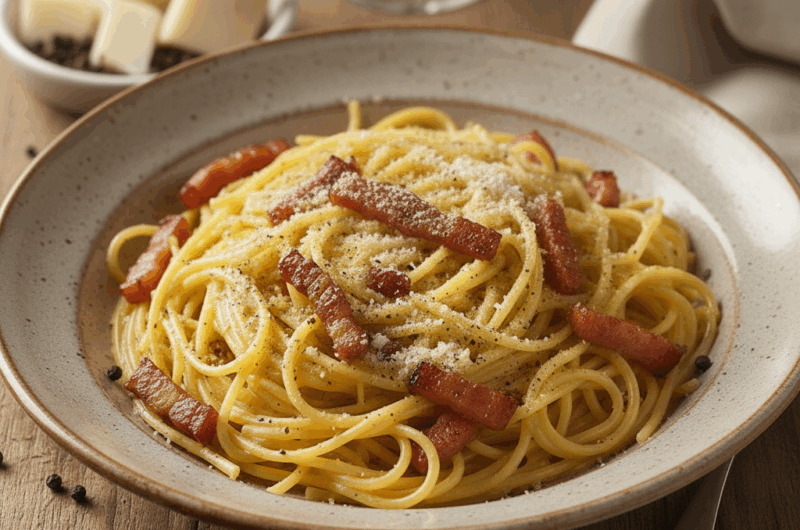
Spaghetti Carbonara
Course: Main courseCuisine: Italian CuisineDifficulty: Medium4
servings10
minutes20
minutes2,930
kcalIngredients
400 g (14 oz) pasta (spaghetti or fettuccine)
150 g (5 oz) guanciale or pancetta, diced
3 large eggs
100 g (3.5 oz) grated Parmesan or Pecorino Romano
2 garlic cloves (optional)
Salt and freshly ground black pepper, to taste
Directions
- Cook the pasta in salted boiling water until al dente. Reserve ½ cup of pasta water.
- In a large pan, cook the guanciale or pancetta over medium heat until crispy. If using garlic, add it crushed and sauté for 1 minute, then remove.
- In a bowl, whisk together the eggs and grated cheese until smooth. Season with a little black pepper.
- Drain the pasta and add it to the pan with guanciale. Remove the pan from heat.
- Slowly add the egg and cheese mixture to the pasta, stirring quickly to create a creamy sauce. Add reserved pasta water a little at a time if needed to loosen the sauce.
- Serve immediately with extra cheese and freshly ground black pepper on top.
Tips:
- Use fresh, high-quality ingredients for the best flavor.
Do not overcook the eggs; remove the pan from heat before adding them to prevent scrambling.
Guanciale is traditional, but pancetta works as a substitute.
The Story Behind Spaghetti Carbonara: Italy’s Creamy Delight
Spaghetti Carbonara remains one of Italy’s most iconic pasta dishes. Unlike other creamy recipes, it achieves its silky texture without cream. Instead, the combination of pasta, fresh eggs, cheese, pancetta or guanciale, and black pepper creates a unique harmony of flavors. As a result, the dish feels indulgent yet still relies on humble ingredients.
Where Carbonara Came From
Historians generally trace the dish to Rome in the mid-20th century. For example, one popular theory links it to coal miners, known as carbonari, who cooked simple meals with portable ingredients. On the other hand, another story credits American soldiers after World War II, who introduced powdered eggs and bacon. Consequently, Italian cooks transformed these rations into the first versions of today’s recipe.
Why Romans Love It
Carbonara earned fame in Rome because of its clever technique. Instead of cream, the sauce forms when hot pasta emulsifies eggs and cheese. Moreover, this method avoids heaviness and highlights the quality of each ingredient. Therefore, the dish illustrates the essence of Italian cuisine: simplicity, balance, and maximum flavor from minimal effort.
Carbonara Around the World
Over time, Carbonara spread far beyond Rome. Today, you can find it in rustic trattorias, modern restaurants, and home kitchens across the globe. Sometimes they are not respect the original recipe, but pasta are still delicious. Furthermore, debates about the right cheese or cured meat continue, which proves how deeply people care about tradition. Nevertheless, every version honors Roman culinary culture and delivers satisfying comfort food.
For step-by-step guidance, try our authentic Carbonara recipe. In addition, browse our Italian recipes collection for more classic dishes. You may also enjoy reading Eataly’s guide to pasta to explore Italian food culture further.